
Taking charge of your dental health starts with understanding the fundamentals. You don't need a dental degree to know what’s happening in your mouth. By the end of this article, you’ll be able to follow along with your dentist, ask informed questions, and feel more confident about your treatment plan.
How Many Teeth Do Humans Have?
It's a simple question with a not-so-simple answer. The number of teeth you have changes throughout your life. Babies are born with no visible teeth, but by the time they're toddlers, they have their full set of baby teeth. So, how many teeth do humans have on average?
A full set of baby teeth, also known as primary teeth, typically consists of 20 teeth. These include incisors, canines, and molars, but no premolars (bicuspids). These teeth are crucial for a child's development, helping them learn to chew, speak, and save space for their permanent teeth.
As we grow, these baby teeth fall out, making way for our permanent adult teeth. A full set of adult teeth is usually 32, including wisdom teeth. This brings us to a new question: how many teeth do adults have? A full, healthy adult mouth has 32 permanent teeth. However, many adults have their wisdom teeth removed, bringing the total down to 28. Knowing this is the first step in understanding your personal dental chart.
Teeth Numbers and Names
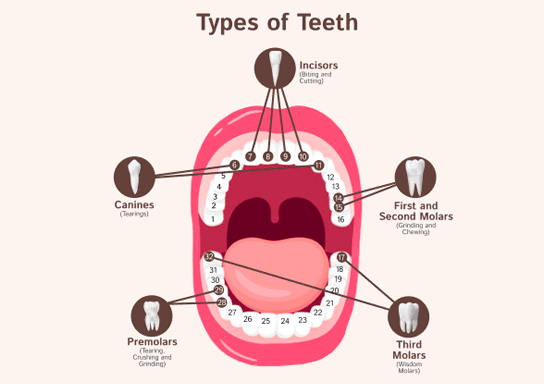
While the numbers are useful for dentists, knowing the teeth names helps you understand their function. Below is a breakdown of the different types of teeth and their numbers.
Incisor Teeth:
These are the flat, sharp teeth at the very front of your mouth, designed for cutting food. There are eight in total (four on top, four on bottom).
Numbers: 8, 9, 24, 25 (central incisors); 7, 10, 23, 26 (lateral incisors).
Canine Teeth:
Located next to your incisors, these are your sharpest teeth. Often called "eye teeth" or "fangs," they are used for tearing food.
Numbers: 6, 11, 22, 27.
Premolars (Bicuspids):
These teeth sit between your canines and molars and are used for crushing and grinding. You have eight premolars.
Numbers: 5, 12, 21, 28 (first premolars); 4, 13, 20, 29 (second premolars).
Molars:
These large, flat teeth at the back of your mouth are your primary grinding machines.
Numbers: 3, 14, 19, 30 (first molars); 2, 15, 18, 31 (second molars).
Wisdom Teeth (Third Molars):
The final set of molars to erupt, these teeth are often removed due to impaction or lack of space.
Numbers: 1, 16, 17, 32.
Putting It All Together: A Simple Comparison
The table below provides a quick reference, showing the relationship between teeth numbers and teeth names
| Tooth Name | Upper Right Quadrant | Upper Left Quadrant | Lower Left Quadrant | Lower Right Quadrant |
|---|---|---|---|---|
| Incisor | 8 (Central), 7 (Lateral) | 9 (Central), 10 (Lateral) | 24 (Central), 23 (Lateral) | 25 (Central), 26 (Lateral) |
| Canine | 6 | 11 | 22 | 27 |
| Premolar | 5 (1st), 4 (2nd) | 12 (1st), 13 (2nd) | 21 (1st), 20 (2nd) | 28 (1st), 29 (2nd) |
| Molar | 3 (1st), 2 (2nd) | 14 (1st), 15 (2nd) | 19 (1st), 18 (2nd) | 30 (1st), 31 (2nd) |
| Wisdom Tooth | 1 | 16 | 17 | 32 |
Learning about teeth numbers, teeth names, and how the dental chart system works isn't just academic knowledge, it's practical information that empowers you to take charge of your dental health. Whether you're trying to understand how many teeth do adults have, identify your canine teeth, or decode information about your molars, this foundation will serve you well.
The next time your dentist mentions tooth numbers or shows you a dental chart, you'll feel confident and informed. You'll be able to ask better questions, understand your treatment options, and make decisions that are right for your oral health and budget.
Remember, your mouth is unique, and understanding its geography through the tooth number system is the first step toward maintaining a healthy, beautiful smile for life. Don't be afraid to ask your dental team questions , they're there to help you understand and maintain your oral health.

