Category:

  • Oral Health

Beyond Brushing: Advanced Solutions for Cavity-Prone Teeth

8 min read | May 27, 2026

Dentist performing advanced cavity treatment procedure on male patient

You brush twice a day. You floss. You even avoid sugar. Yet somehow, cavities find their way into your teeth. If this rings a bell, you're not alone. It is incredibly frustrating when you feel you are doing everything right.

At MySmile Dental Expressions in San Diego, we see this pattern constantly. Patients who suffer from frequent tooth decay are, in reality, dealing with biological risk factors that require advanced solutions for cavity-prone teeth, rather than just standard hygiene.

What Is A Dental Cavity?

A dental cavity begins when bacteria in your mouth feed on sugars and carbohydrates remaining on the teeth. The acid generated by the bacteria during their decomposition weakens the tooth's protective covering, known as the enamel.

Over time, the enamel could deteriorate further to create irreversible damage. Without treatment, the decay can spread deeper into the tooth and eventually reach the nerve.

That's why early detection and preventive care matter so much, especially for patients searching for long-term solutions for cavity-prone teeth instead of temporary fixes.

Types of Cavities

Pit and Fissure Cavities

This decay forms in the deep, narrow grooves on the chewing surfaces of your molars. The fact that these crevices are so tight makes them difficult to clean, trapping food particles and bacteria while accelerating enamel breakdown.
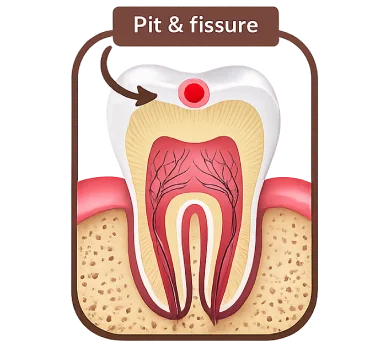
Diagram showing pit and fissure cavity on a tooth for illustrative purposes

Smooth Surface Cavities


These develop along the flat outer surfaces of the teeth, often in between them where plaque tends to accumulate. They usually form slowly and can sometimes be reversed during the early stages with the use of fluoride, remineralization therapies, and consistent hygiene habits.
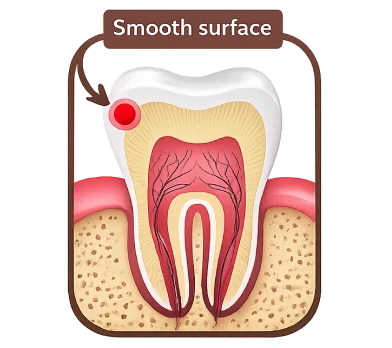
Diagram showing smooth surface cavity on a tooth  for illustrative purposes

Root Cavities


Root decay affects the exposed root surface when gums begin to recede. Unlike the crown, the root lacks hard enamel protection, making it highly vulnerable to acid damage, especially in patients with dry mouth or periodontal disease.
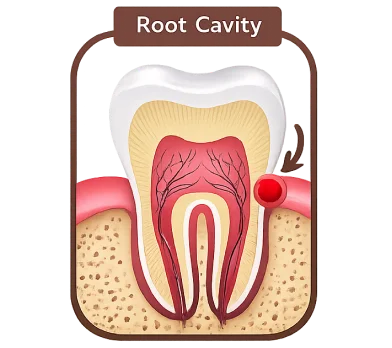
Diagram showing root cavity affecting a tooth for illustrative purposes

Why Are Some People More Cavity-Prone?

One of the many misconceptions about recurrent tooth decay is that it's caused by poor hygiene. In reality, dental caries are far more complex than that. Some patients follow excellent oral hygiene routines and still develop frequent decay due to their biological risk factors.

Salivary pH and Remineralization

Saliva does much more than keep your mouth comfortable. It helps neutralize acids, balancing the pH level and providing minerals like calcium and phosphate back to the enamel in a process known as remineralization.

When saliva becomes too acidic (whether from diet, medications, acid reflux, or dry mouth), the enamel loses its ability to recover properly. Over time, this creates an environment where demineralization happens faster than repair, increasing the likelihood of recurring decay.

Genetics and Enamel Density

Some people naturally have deeper grooves, thinner enamel, or tooth anatomy that traps plaque more easily. These genetic characteristics can make certain areas harder to clean, even with excellent brushing habits.

Enamel density also varies from person to person. Teeth with weaker or more porous enamel may break down faster under acidic conditions, which is why preventive measures should be tailored for each person.

Your Oral Microbiome

Your mouth contains millions of bacteria, but not all bacteria behave the same way. Certain strains, including Streptococcus mutans, are strongly associated with tooth decay because they produce acids that weaken enamel after feeding on sugars and starches.

Some patients naturally happen to have higher levels of these bacteria, which may raise their chances of developing tooth decay despite having good oral hygiene practices.

This is why today's cavity treatments go beyond fixing decayed teeth; they address the root cause as well.

Dentist consulting patient about cavity treatment with digital image on screen behind

Is It a Cavity or Early Demineralization?

Not every area of enamel damage starts as a visible hole in the tooth. In many cases, the earliest warning sign is a chalky white spot known as a white spot lesion. This stage is called early demineralization, where minerals are being lost from the enamel, but permanent structural damage has not fully developed yet. To avoid this, it's important to have regular teeth cleanings.

If the lesion continues without intervention, the enamel can eventually break down into a true cavity that requires restorative treatment such as dental fillings. Detecting these lesions early often means more conservative treatment and less invasive dentistry overall.

Doctor and female patient smiling for preventive dental care promotion

Stop The Cycle of Recurring Cavities

Book a Comprehensive Caries Risk Assessment at MySmile

And leave with a personalized prevention plan made for your biology, not just your habits.
Clinical Solutions: How We "Armor" Your Teeth at MySmile

For patients with recurring tooth decay, prevention often requires more than improving daily hygiene habits. Modern preventive dentistry focuses on creating an advanced protective barrier around vulnerable teeth by strengthening enamel, reducing bacterial activity, and protecting high-risk areas before permanent damage develops.

These clinical treatments are designed to support long-term solutions for cavity-prone teeth by addressing the biological factors behind recurring decay, and not just repairing the damage after it happens.

Dental Sealants for Adults

Many people assume dental sealants are only recommended for children, but adults with deep molar grooves or recurring decay can also benefit from them. These grooves naturally trap plaque and food particles in areas that are difficult to clean completely, even with good brushing habits.

Sealants work like a protective shield over the tooth surface, sealing vulnerable fissures before bacteria and acids can settle into them. By creating this physical barrier, sealants help reduce long-term enamel damage and lower the risk of future cavities in these areas.

Professional Fluoride Varnishes

Professional fluoride varnishes contain significantly higher fluoride concentrations than regular toothpaste. While most commercial toothpastes contain around 1,000–1,500 ppm of fluoride, clinical varnishes can contain more than 20,000 ppm, allowing them to deliver a much stronger enamel-protective effect.

This concentrated treatment helps strengthen weakened enamel, support remineralization, and create a more resistant surface against acid attacks. For patients with recurring dental caries or early demineralization, fluoride varnishes act as an added layer of protection that goes beyond daily home care alone.

Silver Diamine Fluoride (SDF)

Silver Diamine Fluoride (SDF) is a minimally invasive treatment available for managing early tooth decay. This treatment combines powerful antibacterial properties with fluoride-based remineralization to help stop certain lesions from progressing, often without immediate drilling or more invasive procedures.

For patients with dental anxiety, early-stage decay, or high cavity risk, SDF offers a minimally invasive alternative focused on preserving healthy tooth structure whenever possible. Instead of waiting until damage becomes severe enough to require extensive treatment, SDF allows dentists to intervene earlier and more comfortably in appropriate cases.

Dental team treating patient during amalgam removal

Your At-Home Protocol for High-Risk Patients

Most people want to stop tooth decay before it worsens. While home care cannot reverse advanced damage, certain strategies may help protect enamel and slow early decay as a complementary protocol.

Nano-Hydroxyapatite

Nano-hydroxyapatite is considered one of the most promising alternatives and complements to fluoride for enamel repair. Because it closely mimics the natural mineral structure of teeth, it can help rebuild weakened enamel at a microscopic level by filling tiny surface defects before they progress into more significant damage.

Often found in advanced remineralizing toothpaste, nano-hydroxyapatite may help strengthen the tooth surface, reduce sensitivity, and support early-stage enamel recovery as part of a preventive cavity solution strategy.

Xylitol Therapy

Xylitol does more than freshen breath or replace sugar. It actually interferes with the metabolism of cavity-causing bacteria by "tricking" them into consuming a substance they cannot properly process. This disrupts their ability to produce the acids responsible for enamel damage.

Over time, regular use of xylitol gum, mints, or lozenges may help create a less acidic oral environment and reduce the bacterial activity associated with recurring dental caries.

Managing Dry Mouth (Xerostomia)

Chronic dry mouth is one of the most common (and most overlooked) contributors to recurring tooth decay. Saliva plays a critical role in washing away bacteria, neutralizing acids, and supporting enamel remineralization, so when saliva production drops, teeth become far more vulnerable to damage.

Medication use, chronic stress, aging, mouth breathing, and certain medical conditions can all contribute to xerostomia. Managing dry mouth through hydration, saliva-supporting products, and preventive dental care can help reduce ongoing enamel breakdown at home.

FAQ About Cavity Solutions

Is There Actually A "Cavity Solution Home Remedy" That Works?

No, once a physical cavity has formed in the tooth, no home remedy can dissolve or permanently heal the damaged structure. However, if enamel demineralization is detected very early, before a true hole develops, strategies like fluoride, nano-hydroxyapatite, xylitol, and dry mouth management may help slow demineralization and support a healthier oral environment before a tooth cavity solution becomes more invasive.

What Is The Solution For A Cavity?

The best solution for a cavity depends on how advanced the decay is. Early demineralization may improve with preventive care, while deeper damage often requires fillings or restorative treatment. The goal is always to stop progression while preserving as much healthy tooth structure as possible.

When Does A Cavity Stop Being A Minor Issue And Become An Emergency?

A cavity becomes more urgent when you experience persistent pain, swelling, sensitivity that lingers, or signs of infection. In those cases, delaying treatment can allow the decay to spread deeper into the tooth. If you are experiencing these severe symptoms, visiting an emergency dentist in San Diego right away is critical to protect your smile. Meanwhile, a minor cavity issue usually causes little to no discomfort and remains limited to the outer enamel layer.

Are There Cavity Solutions Without Drilling?

Yes, certain early-stage lesions can sometimes be managed without drilling. Preventive treatments like Fluoride Varnishes, Silver Diamine Fluoride (SDF), Sealants, and Remineralization Therapies may help manage very small lesions before traditional drilling becomes necessary. Early detection is what makes these conservative cavity solutions possible.

Dental Expressions